 English
 Nederlands
 Français
 Deutsch
 Español
 Polski
 Русский
 العربية
 Română
Call us on +32 (0) 51 57 58 58 or contact us.
Exhaust system for MAN / Mercedes trucks, buses and vans

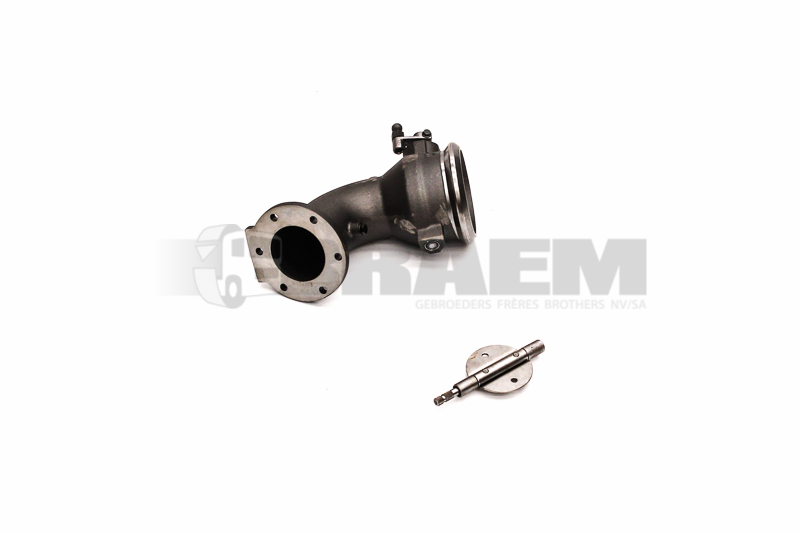
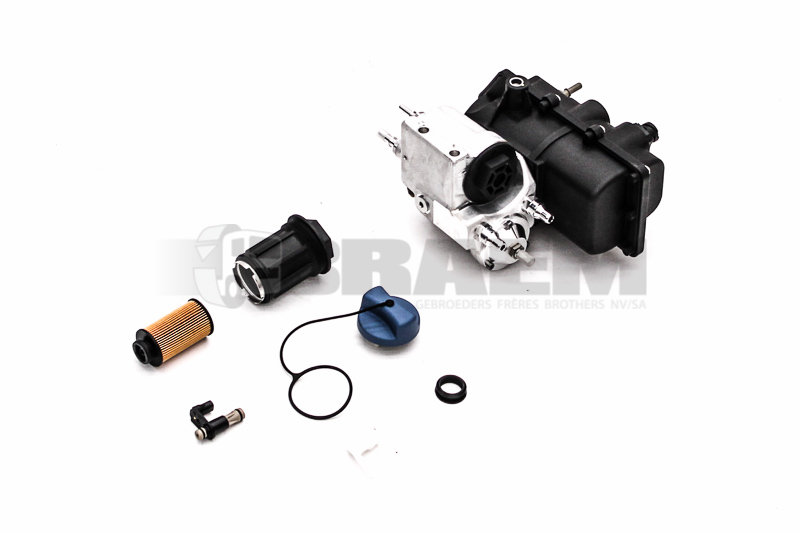

The exhaust system of a MAN or Mercedes truck, coach or van is much more than just an outlet for exhaust gases coming from the engine. The exhaust system ensures that those exhaust gases are discharged safely, noise is muffled and harmful emissions are reduced while the engine continues to operate efficiently. It plays an essential role in engine performance and the vehicle’s overall reliability. In modern vehicles, the exhaust system is technically complex and closely intertwined with engine management and electronic monitoring. Due to high temperatures, pressure differences and intensive use, wear is inevitable. At Braem you will find an extensive range of exhaust parts that allow repairs to be carried out correctly, durably and in compliance with professional standards.
The function of the exhaust system within the vehicle
Via the exhaust manifold and the turbo, the exhaust gases from the engine are routed to the outside, away from the cab and the chassis. For this, the turbo is connected to the muffler(s) by means of exhaust pipes and exhaust flex pipes. This muffler absorbs and limits the noise. This noise is caused by pressure pulses due to the engine’s combustion strokes when the exhaust valves open and the exhaust gases flow out of the engine in pulses. The muffler converts this energy into heat. The exhaust system ensures that fewer harmful substances enter the atmosphere. This is done by capturing soot by means of a soot filter, also called a Diesel Particulate Filter (DPF). Toxic gases are converted into less harmful substances in the catalyst. Nitrogen oxides are broken down using AdBlue in the SCR system (Selective Catalytic Reduction).
Interaction with the engine
The exhaust system, which is connected to the engine, provides backpressure and resistance so that exhaust gases can be discharged in a controlled manner. This allows the engine to operate efficiently without power loss. Without backpressure, the exhaust gases would be removed from the engine too quickly and uncontrollably. This results in poor combustion, and the turbo does not work optimally. Backpressure keeps the pressure in the cylinders higher at the end of combustion, helping to improve emissions and efficiency. Excessive backpressure, on the other hand, overloads the engine, increasing fuel consumption. Soot production increases.
Main components of the exhaust system and engine management to obtain the Euro standard
The Euro standard is a European environmental system that indicates the maximum harmful substances a vehicle may emit into the atmosphere.
Standards are continually being tightened because enforcement against air pollution is becoming stricter and due to the impact of vehicles on health and the climate. Some cities have a low-emission zone. To enter this zone, the vehicle must comply with a specific Euro standard.
How this Euro standard can be achieved:
- The exhaust manifold and the turbo collect the exhaust gases from the engine and route them to the aftertreatment system.
- The catalyst, also called the Diesel Oxidation Catalyst (DOC), converts carbon monoxide (CO) and unburned hydrocarbons (HC) into CO2 and water and helps with regeneration of the soot filter.
- The Diesel Particulate Filter (DPF) captures soot particles and burns them during regeneration.
- The AdBlue system injects a urea solution into the exhaust stream, reducing nitrogen oxide (NOx) emissions.
- The SCR system (Selective Catalytic Reduction) converts NOx into nitrogen (N2) and water (H2O) using AdBlue.
- The ASC system (Ammonia Slip Catalyst) captures excess AdBlue so it does not enter the atmosphere.
- A vehicle that was built to a certain Euro standard must comply with that Euro standard during operation. The engine management ensures that the engine and the exhaust system work together so that the Euro standard is guaranteed. Engine sensors and sensors of the aftertreatment system measure physical quantities and convert them into electrical signals that are sent via wiring harnesses to the engine control unit, also called the ECU (Engine Control Unit). The ECU processes all measurement data from the sensors and uses that information to control the engine and the aftertreatment system (= engine management). It converts the obtained electrical signals into measured values that are compared with the reference values required to achieve the Euro standard.
- In case of deviations, the ECU controls the surrounding systems so that the measured values once again meet the reference values.
Flexible connections and mounting points
The engine moves while driving due to starting and stopping, accelerating and braking. This engine is mounted in the chassis via rubber mounts. The muffler is also mounted on the chassis, which means it is also subject to movement while driving. The engine movements and the muffler movements are different. An exhaust flex pipe is installed between the engine and the muffler to absorb differences in movement. The exhaust flex pipe also ensures that length changes of the exhaust pipes due to thermal expansion are absorbed. It also prevents engine vibrations from propagating through the entire exhaust and the cab. It prevents high forces on the turbo and the exhaust manifold. The muffler is not mounted directly, but on the chassis via rubber mounts. This provides vibration isolation and prevents metal-on-metal friction, avoiding rapid wear of the exhaust parts.
Common wear and recognizable symptoms
The exhaust flex pipe moves constantly while driving to absorb differences in movement. These movements increase when the engine mounts are worn. As a result, the flex pipe tears when it is worn. The hot exhaust gases from the engine cause the exhaust pipes to undergo thermal deformation, which can cause them to warp. As a result, they no longer fit perfectly together, causing leaks. Due to weather conditions, parts rust and cracks and holes can form. Rainwater then enters the exhaust system and causes a chemical reaction. Sulfur from the fuel is converted into sulfuric acid through a reaction with water. This causes internal corrosion. Nitrogen oxides (NOx) react with water vapor to form nitric acid (HNO3). This acid attacks steel, welds and the sensors. This causes the vehicle to make a hissing sound during acceleration. Exhaust gases leave the exhaust system in the engine bay. Vibrations occur. Backpressure becomes too low and causes a poorly functioning turbo. Many short trips, poor regeneration, problems with the injectors and engine oil consumption cause the soot filter to fill up with soot and ash. The DPF can melt or burn. Internal cracks occur. The engine loses power or goes into limp mode. Fuel consumption rises and fault codes appear on the instrument panel.
Operation of the AdBlue system and signals indicating problems
AdBlue is added to the exhaust gases to reduce nitrogen oxide (NOx) emissions. AdBlue is a mixture of urea and demineralized water. It is not flammable, not toxic, but it is corrosive to some metals and crystallizes when it dries. AdBlue is stored in the AdBlue tank and is metered via the AdBlue pump to the AdBlue injector. This injector is mounted in an exhaust pipe after the soot filter and sprays AdBlue into the hot exhaust gases. Due to the heat, the urea decomposes into ammonia (NH3) and CO2. In the SCR catalyst, ammonia reacts with nitrogen oxides (NOx), forming nitrogen (N2) and water (H2O). These are harmless substances that are simply released into the air. A NOx sensor measures how many nitrogen oxides (NO and NO₂) are present in the exhaust gases.
This measurement is performed continuously while driving and is crucial for the proper operation of the Euro 6 emissions system (SCR with AdBlue). The engine control unit (ECU) uses the NOx value to determine how much AdBlue must be injected. When the NOx value is too high, more AdBlue must be injected. When too much AdBlue is injected, ammonia slip occurs. This means ammonia (NH₃) passes through the SCR catalyst unused and exits with the exhaust gases, instead of fully reacting with the nitrogen oxides. Excess ammonia means the SCR catalyst can no longer process it. On Euro 6 engines, two NOx sensors are installed. One is installed before the SCR catalyst and measures how many nitrogen oxides enter the catalyst. The other is installed after the SCR catalyst and measures how many nitrogen oxides leave the catalyst. The ECU compares these values to verify whether the SCR is actually breaking down the NOx. A malfunctioning AdBlue system activates a warning light in the cab, keeping the driver informed, and can be recognized by a strong odour due to unprocessed ammonia.
The importance of timely repair or replacement of AdBlue components
A malfunctioning AdBlue system causes the engine to no longer comply with the required Euro standard. A vehicle that does not meet the standard pollutes more than permitted and exceeds legal limits. Using an overly polluting vehicle is punishable and will fail inspection. It receives a driving ban. With poor AdBlue operation, the vehicle goes into limp mode. The ECU puts the engine into limp mode (power limitation) to limit emissions, prevent engine damage, ensure safety and enforce legislation. In the most extreme case, a start inhibition follows after a countdown timer. This means the vehicle can no longer start if a certain fault is not remedied within a certain time or distance.
Consequences and causes of increased backpressure for the engine
Backpressure of the exhaust system relative to the engine is necessary for proper engine operation. However, excessive backpressure causes direct consequences such as power loss, poor acceleration and engine choking at high RPM. It causes higher exhaust gas temperatures, which can burn the exhaust valves installed in the cylinder head. In the worst case, the cylinder head deforms. The turbo wears faster. Damage occurs to the gaskets, meaning a proper seal can no longer be guaranteed. Excessive backpressure causes poor scavenging of the cylinders. The combustion gases are not removed optimally, reducing oxygen filling. This leads to incomplete combustion, resulting in more soot and carbon deposits. The EGR system is overloaded. Increased backpressure for the engine (exhaust backpressure) occurs when exhaust gases cannot flow away freely. Often, this is the result of a blockage in the exhaust. The catalyst may have melted, the soot filter may be full, an exhaust flex pipe may have collapsed, and a dent may be present in an exhaust pipe. A poorly running engine due to poorly functioning injectors can cause the fuel mixture to burn poorly or incompletely. This leads to higher soot production, causing the exhaust system to become clogged.
Repairing, replacing or cleaning exhaust parts
Torn exhaust flex pipes or exhaust pipes must be replaced. When welding exhaust components, a number of technical, metallurgical and practical processes occur that are important for the operation and service life of the exhaust and the engine. The exhaust is heated very strongly locally. The material expands during welding and shrinks again during cooling, which causes the parts to deform. The correct sealing of the exhaust parts can no longer be guaranteed, allowing exhaust gases to leave the exhaust system in the wrong place. Parts made of stainless steel lose their corrosion resistance due to welding. A soot filter (DPF) can be oversaturated with soot and ash, making regeneration from the vehicle no longer possible. These soot filters can be removed on trucks that comply with the Euro 6 standard. They can be cleaned in a machine using compressed-air pulses. This blows the ash out of the pores. They can also be cleaned thermally, whereby soot is burned into ash. A catalyst cannot be repaired and must be replaced in case of internal damage.
Exhaust systems tailored to vehicle use
On trucks, there are usually three possible exhaust outlets. Which one is chosen depends on use, vehicle type and environment. A side-exit outlet is used on urban distribution vehicles and is less sensitive to wind. A vertical outlet (stack/vertical) is used on trucks that must work off-road. The gases are discharged above the cab, causing less nuisance for the driver and colleagues on site. A rear-exit outlet is mainly used on vehicles with a short wheelbase.
Practical advice from experience
Switch off the engine and let the engine and exhaust system cool down so the mechanic does not get burned. Wearing gloves and safety glasses is recommended. Read out fault codes via the onboard computer or via a diagnostic device connected to the OBD connector (On-Board Diagnostics). Check the pressure differential of the soot filter (DPF). Check the correct operation of lambda sensors and NOx sensors. Check the vehicle for warning and fault lights on the instrument panel. Perform a visual inspection. Check exhaust flex pipes, exhaust pipes and mufflers for rust, cracks and loose weld seams. Check the suspension points and the required rubber mounts. If necessary, have the soot filter cleaned. Check the AdBlue system. AdBlue is not toxic but is corrosive. Therefore, also use gloves and safety glasses here. Avoid contact of AdBlue with paint and metal surfaces. It causes stains and corrosion. Ensure the workshop is well ventilated during filling or cleaning. Replace the AdBlue filter. Check the system for blockages. AdBlue crystallizes when the water evaporates, causing blockages. AdBlue can freeze at temperatures below -11°C. In summary, we can say that AdBlue crystallizes when water evaporates and urea remains behind as white crystals, usually around the tank, lines or injectors. Install the new or repaired parts correctly. Connect sensors and valves. Reprogram where necessary so that fault codes disappear. Let the engine run to operating temperature and check the exhaust system for smoke or leaks.
The added value of Braem for exhaust parts
Braem has a large stock of exhaust parts for MAN and Mercedes trucks, coaches and vans. Thanks to fast delivery and technical expertise, repairs can be carried out efficiently.
Customers choose Braem because of:
- Good quality through thorough quality control
- Braem has the required equipment to regenerate DPF filters
- Technical support during disassembly and assembly
- Fast delivery within Europe and beyond
- Clear warranty and return conditions
A proper functioning exhaust system is essential for performance, reliability and compliance with emissions standards. With the right parts and expertise, the vehicle remains optimally deployable.