 English
 Nederlands
 Français
 Deutsch
 Español
 Polski
 Русский
 العربية
 Română
Call us on +32 (0) 51 57 58 58 or contact us.
Cab for MAN / Mercedes trucks, buses and vans
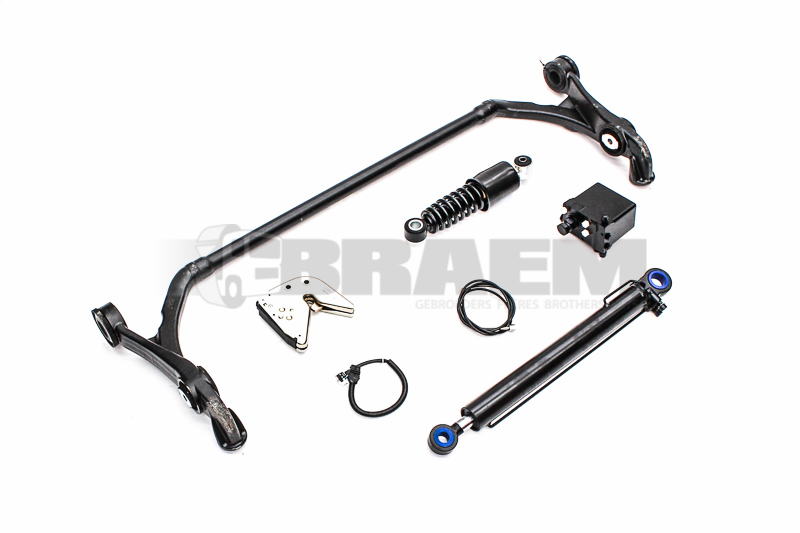
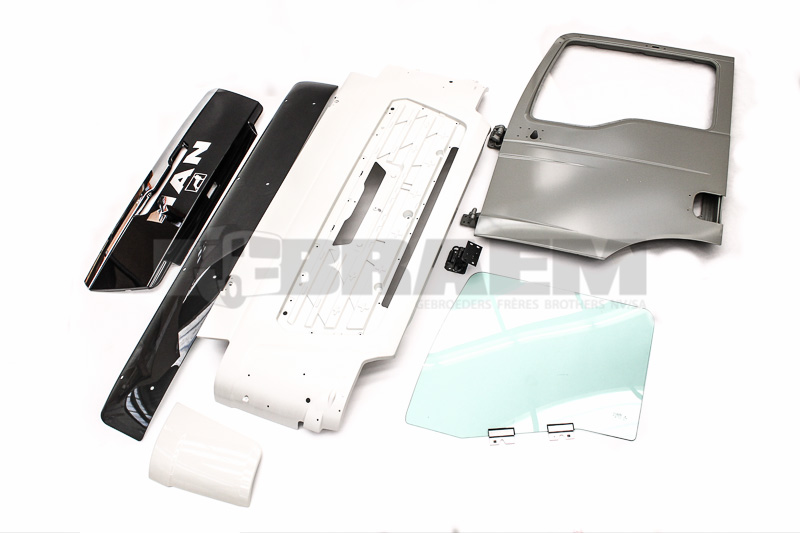
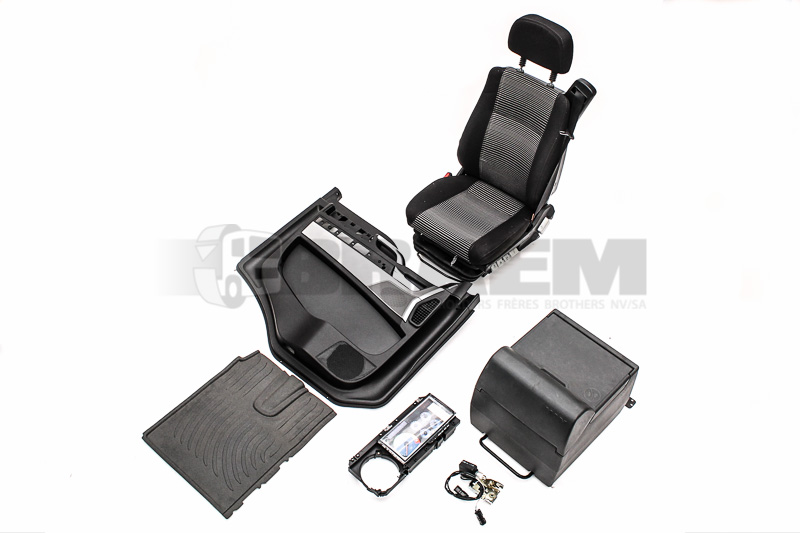
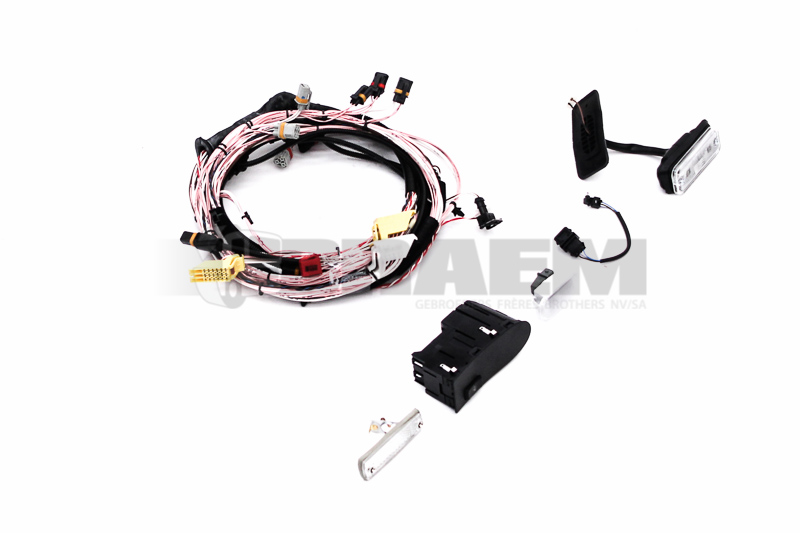

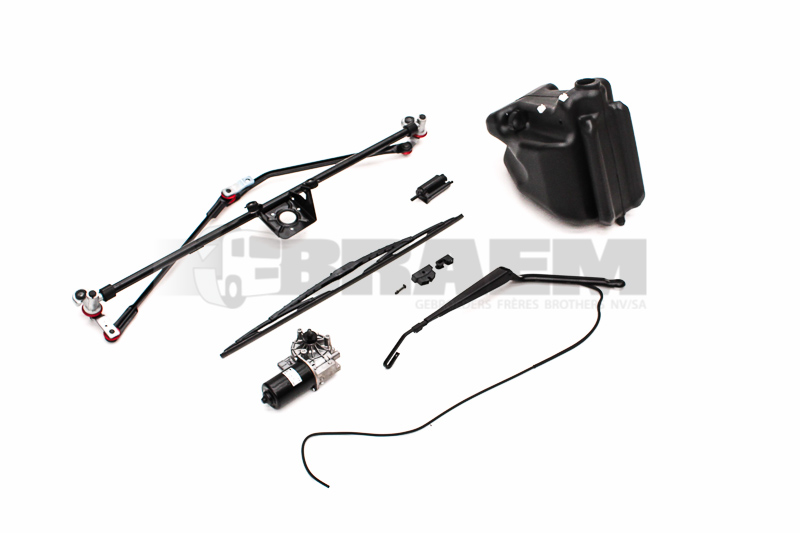
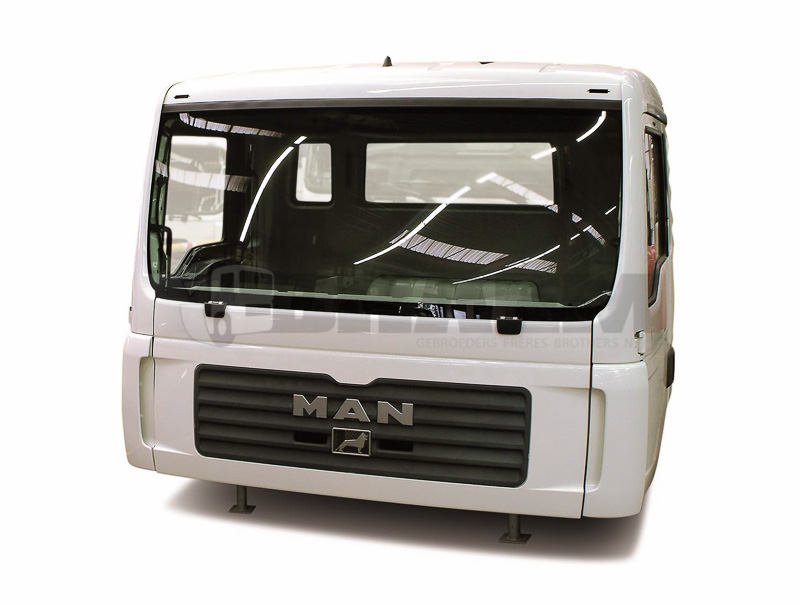
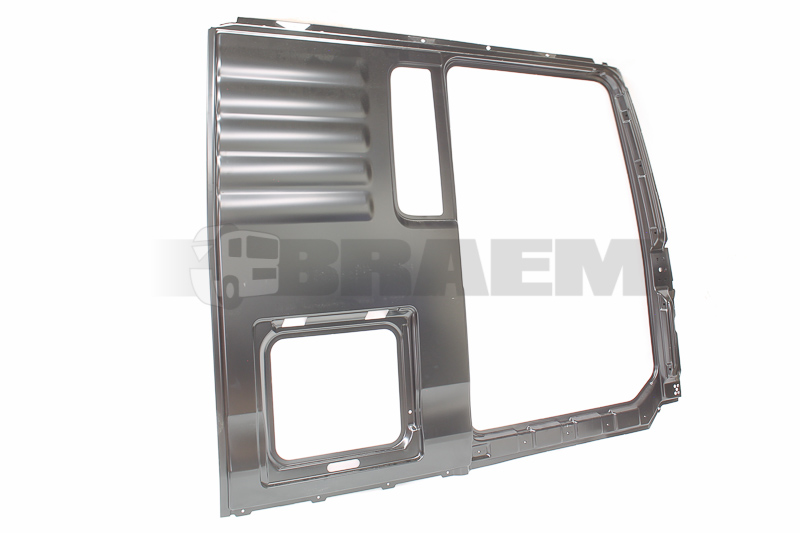

The cab is the driver’s daily workspace and plays a crucial role in comfort, safety and ergonomics. In MAN and Mercedes trucks, coaches and vans, the cab is designed for intensive professional use. However daily operation, vibrations, weather influence and damage from external factors, inevitably cause wear. Good cabin parts are essential to keep vehicles safe, comfortable and productive on the road. At Braem you will find an extensive range of cab parts that enable repairs to be carried out efficiently and sustainably.
The cab as an integral part of vehicle performance
Although the cabin is often seen as a separate unit, it is technically intricately linked to various vehicle systems. The driver determines driving behaviour and can operate several other systems from the cabin. He has a direct influence on driving and vehicle control: He operates the steering via the steering wheel. He operates the clutch via the clutch pedal. He operates the brake pedal, which activates the braking system. Operating the accelerator pedal ensures that a vehicle can accelerate. Using switches and levers mounted in or on the dashboard, the driver can control the following systems: the indicators and lighting, the windscreen wiper system, the air conditioning or heating, the horn, cruise control and speed limiting. Via the gearshift system in the cabin, the driver can shift up or down. Via the mirrors, the driver has rear visibility.
Systems installed in the cabin allow the driver to make hands-free calls. A navigation system helps the driver reach the destination more efficiently. The vehicle is equipped with an air-suspended seat for the driver.
Interaction with chassis and cab suspension
The cabin is mounted on the chassis via a tilting mechanism at the front and a locking mechanism at the rear of the cabin. This allows the cabin to be tilted forward after unlocking so maintenance or repairs can be carried out on the engine. The cabin is suspended by shock absorbers and silent blocks. When these parts wear, vibrations and impacts are no longer neutralised. As a result, the driver’s comfort can no longer be guaranteed. The cabin is subjected to vibrations, causing the interior and the bodywork to be overloaded.
Common wear and damage to cab parts
Cabin parts are subjected daily to loads from uneven road surfaces, acceleration and deceleration of the vehicle, the weight of the cabin itself, cornering, vibrations from the chassis and suspension, weather conditions, drivetrain vibrations and the driver’s behaviour. As a result, cabin parts are subject to wear and often need to be replaced. In the event of a collision or a break-in, there is immediate damage. The damaged parts must then be replaced to make the vehicle roadworthy, safe and presentable again.
Exterior and structural components
The cabin is exposed to the sun both inside and out. This causes discolouration of the bodywork and discolouration of plastics and the interior trim. The materials used dry out, causing them to age faster. The elasticity of seals and rubbers decreases. Poorly closing doors let water and air through, which can lead to moisture problems in the cabin and damage to electrical systems and wiring looms. The impact of the sun can be partially mitigated by a tinted windscreen or a sun visor.
Interior, ergonomics and driver comfort
Comfort and ergonomics for the driver are of foremost importance for every application but are most important for vehicles used for international transport. The cabin is the driver’s habitat both day and night. It is his living space. The driver works, eats, rests and sleeps in his cabin. This is facilitated by, among other things, a good bed, curtains, a cool box, storage cabinets and good seats for both the driver and passengers. Cabins are also made larger so that the driver can move more easily. For this purpose, cabins are made wider. They are fitted with a raised roof. They are made longer so that the sleeping area is optimised. Sometimes the law requires a certain cabin size for specific applications. This provides more legroom and headroom and an optimal seating position on long journeys.
Consequences of worn interior parts
The cabin is the driver’s habitat. Its condition determines the driver’s physical health. A worn driver’s seat means it is no longer adjustable. As a result, the driver can no longer set the ideal seating position, which can lead to chronic back, neck and joint problems. Poor operation of pedals, window regulators and switches causes strain on muscles and joints. A poor bed causes sleep deprivation. This lowers reaction time. It causes stress and reduced alertness. Poorly functioning interior parts cause frustration and demotivation. A non-functioning radio causes boredom. The driver receives no weather or traffic information. In summary, worn interior parts lead to reduced comfort, lack of information and fatigue. This results in an increased risk of accidents.
Repairing or replacing cabin parts
Body parts such as the bonnet, the front grille, wind deflectors and the spoiler kit are made from composite materials. Others, such as doors, the roof and the bare cabin parts, are made of steel or aluminium. When these parts show minor damage or discolouration, they are repaired. The old paint and minor damage are removed by sanding. Furthermore, they are cleaned and degreased. They are resprayed in the paint shop. The paint is cured in an oven or under UV light. They are then refitted. If parts are no longer repairable due to large dents, deformations or cracks, they are replaced with new parts. They can no longer be restored to their original shape. Any repair could also reduce the strength and safety of the part. Sometimes repairs are also time-consuming, making repair more expensive than replacement.
Practical decision framework
Whether or not to repair a cabin depends on numerous factors. First, an inventory must be made of the damaged parts. Are the damaged parts repairable or do they need to be replaced with new ones? Sometimes new parts are cheaper than the repair costs and associated labour for the old part. Are the damaged parts visible or not visible after installation? Is it necessary to repair or replace the invisible parts? Some parts for which strength is of significant importance must be replaced with new ones and must not be repaired. Some new parts are no longer available, making repair the only solution. One must also ask whether repair is technically possible. Can the part be safely restored to its original shape and strength? Sometimes welding is not allowed on the parts. If the above study shows that repairing the cab is more expensive than replacing the old one with another, we have the following options: the old cab is replaced with a new one. The old cabin is replaced with a second-hand cab.
Impact of cab issues on other vehicle systems
From the cabin, the driver controls other systems. If the parts in the cabin intended for this purpose are worn or broken, the other systems cannot be manipulated optimally.
Preventing secondary damage
Correct functioning cabin parts ensure that other systems such as the steering, the clutch, the braking system and the engine do not suffer damage. Proper functioning electrical components provide higher safety. A proper functioning windscreen wiper system provides better visibility, factors that can prevent accidents. Properly functioning air conditioning and heating, a properly functioning seat and radio provide comfort and help prevent absenteeism due to illness.
The added value of Braem for cab parts
Braem has a large stock of cab parts for MAN and Mercedes trucks, buses and vans, allowing repairs to be carried out quickly. This is essential to keep vehicles out of service for as short a time as possible. We have an ultra-modern paint facility, allowing parts to be supplied in colour.
Customers rely on Braem because of:
- Body parts with a correct fit
- Excellent quality thanks to thorough quality control
- Body parts can be supplied in colour
- Technical support for disassembly and assembly
- Fast delivery within Europe and beyond
- Transparent warranty and return conditions
A well-maintained cabin not only increases comfort, but also directly contributes to safety, productivity and the professional appearance of the vehicle.