 English
 Nederlands
 Français
 Deutsch
 Español
 Polski
 Русский
 العربية
 Română
Call us on +32 (0) 51 57 58 58 or contact us.
Axles for MAN / Mercedes trucks, buses and vans
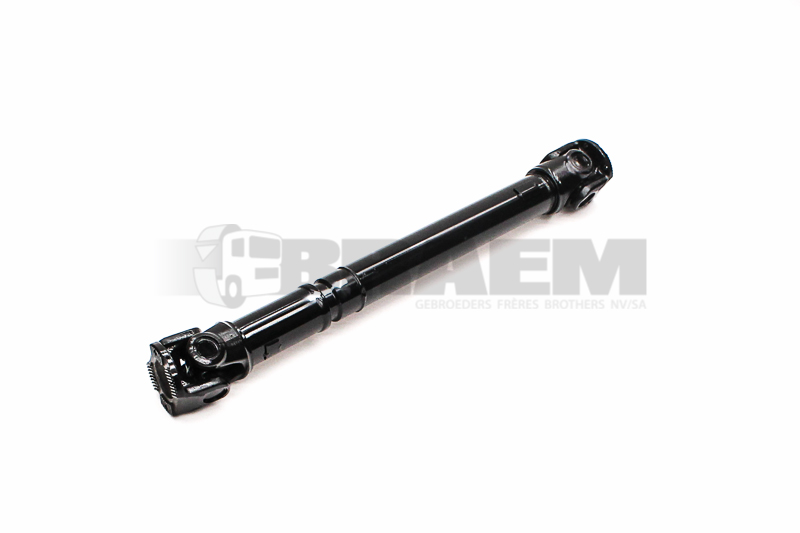

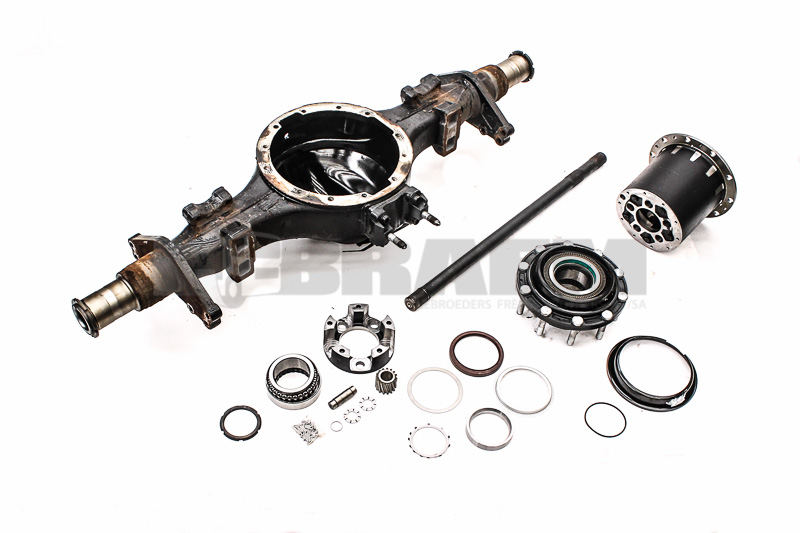
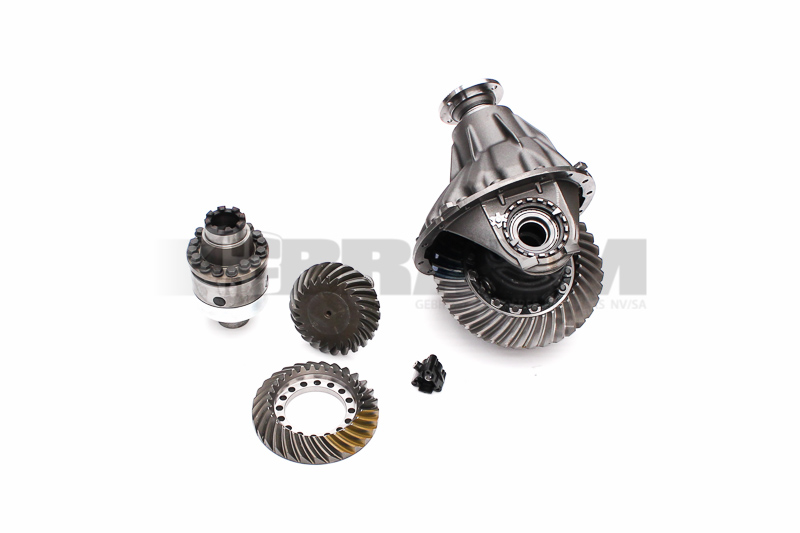

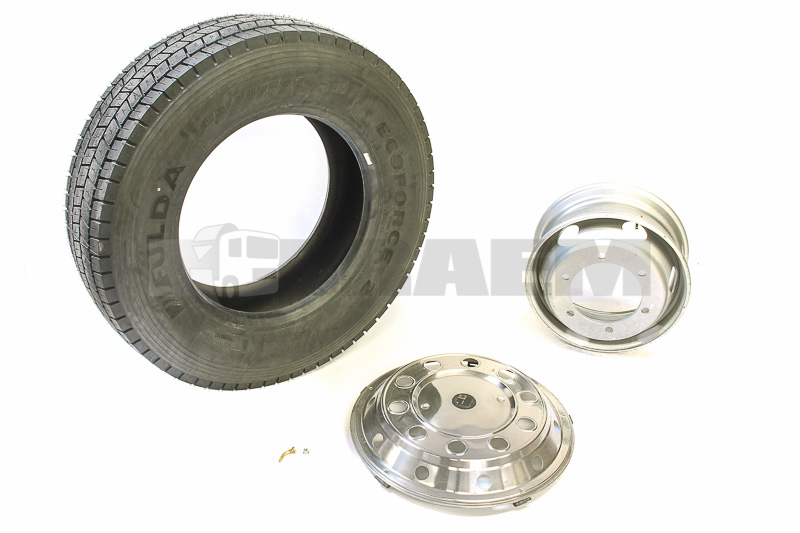
These axles may or may not be driven. In every MAN or Mercedes truck, coach and van, these axles ensure the vehicle can move. They ensure that engine power is transmitted to the wheels efficiently and in a controlled manner, regardless of load, driving conditions or use. In professional applications, where vehicles move heavy loads daily and cover long distances, these components are under constant mechanical stress. At Braem you will find an extensive range of driveline and axle parts that enable repairs to be carried out sustainably, reliably and cost-effectively.
The function of the driveline and axles within the vehicle
The front axle ensures, the vehicle can be steered. The front axle consists of the front axle beam, on which a steering knuckle is mounted on both sides using king pins. These steering knuckles, together with the king pins, form the pivot point about which the wheels can swivel. The wheel hubs are mounted on these steering knuckles. The hub forms the rotating connection between the wheel and the axle. Wheel bearings are used for this. These wheel bearings are usually grease-lubricated. The bearings are sealed with oil seals. This allows the wheels to rotate freely while also providing solid support. In summary, we can say that the hub lets the wheel rotate and the steering knuckle lets the wheel steer.
The rear axles carry a large part of the vehicle weight and load. They transmit engine torque via the gearbox and the differential to the wheels. For this, the rear of the gearbox is connected to the differential by a propshaft. The differential is mounted in the rear axle housing. Via a bevel gear set consisting of a pinion and a crown wheel mounted in the differential, the rotational movement of the propshaft is converted into the vehicle moving forward or backward. It distributes torque over the wheels of one axle. A differential contains a set of gears that allows multiple rotations at different speeds to be taken off from one driving shaft. The differential allows the left and right wheel to rotate at different speeds when cornering. When making a turn, the inner wheel travels a shorter distance and will therefore rotate more slowly than the outer wheel. In muddy terrain and on a slippery road this is a disadvantage, because one wheel can start to slip while the other remains stationary. This can be solved by locking the differential. We then speak of a locking differential. It is a differential that can be temporarily locked so that both wheels continue to receive power. The wheel hubs are mounted on the ends of the rear axle housing. These wheel hubs provide the connection between the rear axle and the wheels and are mounted with wheel bearings. This allows the wheels to rotate freely while also providing solid support. The wheel bearings are oil-lubricated and sealed with oil seals. The axle shafts connect the differential to the wheel hubs, transmitting engine torque to the wheel hubs. On a driven axle with planetary hub reduction, an additional reduction is provided at the wheel hubs. The axle shafts coming from the differential are not mounted directly to the wheel hubs, but have a sun gear at the end that engages, via a planetary set, with a ring gear. Driven front axles also exist. There, the connection between the differential and the hub is made with a CV joint.
Interaction with engine and gearbox
The engine converts fuel into kinetic energy. The engine rotates perpendicular to the vehicle’s longitudinal axis. Via the clutch, the engine is connected to the gearbox. The propshaft connects the output of the gearbox to the differential of the driven rear axle. This converts the rotational movement of the engine into a rotational movement parallel to the vehicle’s longitudinal axis. Via axle shafts, this movement is transmitted to the wheel hubs and the wheels. This allows the vehicle to drive forward or backward.
Essential components within the driveline and axles
This category includes, among other things, driven axles, differentials, propshafts, wheel hubs, hub reductions, wheel bearings, axle shafts and seals. All of the parts mentioned contain rotating components that must be adequately lubricated.
Typical wear and recognizable signs
Common signs of wear are humming or buzzing noises at constant speed, vibrations under load, and oil leaks at axles or differentials. When bearings lose their lubricating film, wear due to friction increases rapidly. This leads to higher temperatures and can even cause axle deformation.
The importance of timely maintenance of the driveline and axles
Driveline components are often only checked when problems are already clearly audible or noticeable. In practice, however, preventive maintenance is far more effective in avoiding expensive repairs.
Preventive checks prevent downtime
Regularly check the oil level of the driven rear axle to ensure proper lubrication. Check the rear axle for leaks. Check the universal joints of the propshaft. Check the wheel bearings for wear and play.
Repairing or replacing driveline components
Not every defect requires complete replacement. In some cases, driveline components can be overhauled, depending on the nature and extent of the damage.
When overhaul is possible
When wear is limited to bearings and seals, overhauling the axle can be a technically sound solution. This does require that the axle housing is reusable. The differential can be overhauled provided that the bevel gear set and the differential housing are reusable.
When replacement is necessary
The driveline of a truck must be replaced when certain critical defects or wear occur that compromise the safety and reliability of the vehicle. The vehicle must comply with legal requirements. In that case, the vehicle will no longer pass inspection.
Driveline matched to use and load
Not every driveline is loaded in the same way. Vehicles in construction transport or heavy haulage are subject to different strains than vehicles that mainly cover long distances at constant speed.
Practical advice based on experience
Our specialists advise choosing reinforced components for heavy-duty applications and performing regular oil analyses. Metal particles in the oil are often an early indicator of wear and make timely intervention possible before serious damage occurs.
The added value of Braem for driveline and axles
Braem has the largest European stock of driveline and axle parts for MAN and Mercedes trucks, coaches and vans. This enables repairs to be carried out quickly, keeping downtime to a minimum.
Customers rely on Braem because of:
- Good quality through thorough quality control
- Fast delivery and wide availability
- Technical support with diagnosis and installation
- Clear returns and warranty handling
By choosing Braem, customers invest in reliability, safety and a longer service life for their vehicles.