 English
 Nederlands
 Français
 Deutsch
 Español
 Polski
 Русский
 العربية
 Română
Call us on +32 (0) 51 57 58 58 or contact us.
Axle driving head repair kit
- New Thanks to our product knowledge and built-up relationships with manufacturers worldwide, we found the most reliable alternatives. Best price-quality.
 Availability: Request availabilitySCA1733856€243.04
Guide price excl. VAT
Equivalenten:
SCA1733856, 1733856, VBA005.681, 005681 - New Thanks to our product knowledge and built-up relationships with manufacturers worldwide, we found the most reliable alternatives. Best price-quality.
 Availability: Request availabilityVBA005.681
 €188.64
Guide price excl. VAT
Equivalenten:
SCA1733856, 1733856, 74170155, 74170155, DT1.16369, 116369, VBA005.681, 005681 - New Thanks to our product knowledge and built-up relationships with manufacturers worldwide, we found the most reliable alternatives. Best price-quality.
 Availability: Request availabilityVBA006.051 €595.60
Guide price excl. VAT
Equivalenten:
74170661, 74170661, SCA1355543, 1355543, EUR74.17.0661, 74170661, VBA006.051, 006051 - New Thanks to our product knowledge and built-up relationships with manufacturers worldwide, we found the most reliable alternatives. Best price-quality.
 Availability: Request availabilityVBA006.068 €414.18
Guide price excl. VAT
Equivalenten:
74170592, 74170592, SCA1377900, 1377900, EUR74.17.0592, 74170592, VBA006.068, 006068 - New Thanks to our product knowledge and built-up relationships with manufacturers worldwide, we found the most reliable alternatives. Best price-quality.
 Availability: Request availabilityVBA006.069 €538.11
Guide price excl. VAT
Equivalenten:
SCA1377902, 1377902, EUR74.17.0591, 74170591, VBA006.069, 006069 - New Thanks to our product knowledge and built-up relationships with manufacturers worldwide, we found the most reliable alternatives. Best price-quality.
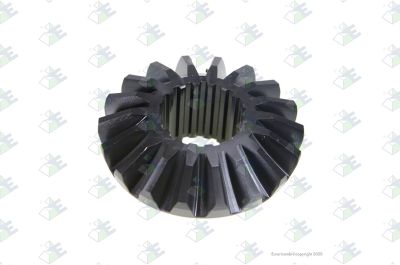 Availability: Request availabilityVBA006.070 €124.40
Guide price excl. VAT
Equivalenten:
SCA164433, 164433, EUR74.17.0182, 74170182, VBA006.070, 006070 - New Thanks to our product knowledge and built-up relationships with manufacturers worldwide, we found the most reliable alternatives. Best price-quality.
 Availability: Request availabilityVBA006.073 €61.16
Guide price excl. VAT
Equivalenten:
SCA184602, 184602, EUR74.17.0181, 74170181, VBA006.073, 006073 - New Thanks to our product knowledge and built-up relationships with manufacturers worldwide, we found the most reliable alternatives. Best price-quality.
 Availability: Request availabilityVBA006.087 €795.86
Guide price excl. VAT
Equivalenten:
74170859, 74170859, SCA1930261, 1930261, EUR74.17.0859, 74170859, VBA006.087, 006087 - New Thanks to our product knowledge and built-up relationships with manufacturers worldwide, we found the most reliable alternatives. Best price-quality.
 Availability: Request availabilityVBA006.088 €91.88
Guide price excl. VAT
Equivalenten:
74170863, 74170863, SCA1408146, 1408146, VBA006.088, 006088 - New Thanks to our product knowledge and built-up relationships with manufacturers worldwide, we found the most reliable alternatives. Best price-quality.
 Availability: Request availabilityVBA006.107 €686.07
Guide price excl. VAT
Equivalenten:
74171038, 74171038, SCA2018885, 2018885, VBA006.107, 006107 - New Thanks to our product knowledge and built-up relationships with manufacturers worldwide, we found the most reliable alternatives. Best price-quality.
 Availability: Request availabilityVBA006.109 €115.30
Guide price excl. VAT
Equivalenten:
74170902, 74170902, SCA1519390, 1519390, VBA006.109, 006109 - New Thanks to our product knowledge and built-up relationships with manufacturers worldwide, we found the most reliable alternatives. Best price-quality.
 Availability: Request availabilityVBA006.110 €177.10
Guide price excl. VAT
Equivalenten:
SCA2111306, 2111306, VBA006.110, 006110 - New Thanks to our product knowledge and built-up relationships with manufacturers worldwide, we found the most reliable alternatives. Best price-quality.
 Availability: Request availabilityVBA006.111 €43.28
Guide price excl. VAT
Equivalenten:
74170901, 74170901, SCA1519392, 1519392, VBA006.111, 006111 - New Thanks to our product knowledge and built-up relationships with manufacturers worldwide, we found the most reliable alternatives. Best price-quality.
 Availability: Request availabilityVBA006.144 €361.09
Guide price excl. VAT
Equivalenten:
74170718, 74170718, SCA1526117, 1526117, VBA006.144, 006144 - New Thanks to our product knowledge and built-up relationships with manufacturers worldwide, we found the most reliable alternatives. Best price-quality.
 Availability: Request availabilityVBA006.281 €866.14
Guide price excl. VAT
Equivalenten:
DAF18170120, 18170120, 18170120, 18170120, VBA006.281, 006281 - New Thanks to our product knowledge and built-up relationships with manufacturers worldwide, we found the most reliable alternatives. Best price-quality.
 Availability: Request availabilityVBA006.288 €325.07
Guide price excl. VAT
Equivalenten:
170396, 170396, VBA006.288, 006288, VOL22766751, 22766751 - New Thanks to our product knowledge and built-up relationships with manufacturers worldwide, we found the most reliable alternatives. Best price-quality.
 Availability: Request availabilityVBA006.306 €1,001.38
Guide price excl. VAT
Equivalenten:
SCA1431674, 1431674, SCA1867361, 1867361, 74170939, 74170939, DT1.16648, 116648, VBA006.306, 006306 - New Thanks to our product knowledge and built-up relationships with manufacturers worldwide, we found the most reliable alternatives. Best price-quality.
 Availability: Request availabilityVBA006.410 €213.12
Guide price excl. VAT
Equivalenten:
IVE42119538, 42119538, VBA006.410, 006410 - New Thanks to our product knowledge and built-up relationships with manufacturers worldwide, we found the most reliable alternatives. Best price-quality.
 Availability: Request availabilityVBA006.511 €3,343.90
Guide price excl. VAT
Equivalenten:
SCA1949449, 1949449, VBA006.511, 006511 - New Thanks to our product knowledge and built-up relationships with manufacturers worldwide, we found the most reliable alternatives. Best price-quality.
 Availability: Request availabilityVBA006.512 €1,773.85
Guide price excl. VAT
Equivalenten:
SCA2076948, 2076948, VBA006.512, 006512 - New Thanks to our product knowledge and built-up relationships with manufacturers worldwide, we found the most reliable alternatives. Best price-quality.
 Availability: Request availabilityVBA006.807 €98.52
Guide price excl. VAT
Equivalenten:
SCA1122967, 1122967, SCA1444820, 1444820, VBA006.807, 006807 - New Thanks to our product knowledge and built-up relationships with manufacturers worldwide, we found the most reliable alternatives. Best price-quality.
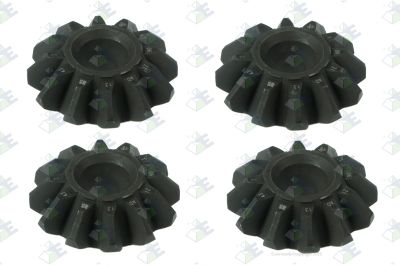 Availability: Request availabilityVBA006.808 €64.32
Guide price excl. VAT
Equivalenten:
SCA1122971, 1122971, SCA1385432, 1385432, DT1.16591, 116591, VBA006.808, 006808 - New Thanks to our product knowledge and built-up relationships with manufacturers worldwide, we found the most reliable alternatives. Best price-quality.
 Availability: Request availabilityVBA006.815 €395.19
Guide price excl. VAT
Equivalenten:
SCA1745700, 1745700, VBA006.815, 006815 - New Thanks to our product knowledge and built-up relationships with manufacturers worldwide, we found the most reliable alternatives. Best price-quality.
 Availability: Request availabilityVBA006.830 €1,198.99
Guide price excl. VAT
Equivalenten:
RVI50.01.859.269, 5001859269, RVI50.01.863.200, 5001863200, 70170114, 70170114, DT6.94203, 694203, VBA006.830, 006830
A differential repair kit enables targeted reconditioning when wear is limited to replaceable components and the differential housing and gear teeth are still serviceable. For MAN and Mercedes trucks, buses and vans, a correctly specified kit ensures that individual wear parts are not missing during the repair. However, contents vary by version: bearing repair kits, seal kits and kits for differential pinion and side gears are not interchangeable.
When cornering, the outer wheel travels further than the inner wheel. The differential compensates for this difference between the left and right wheels by allowing the two driven wheels to rotate at different speeds. The differential pinion and side gears allow these speed differences while transmitting drive torque. This lets the outer wheel turn faster than the inner wheel and prevents the tyres from slipping or scrubbing against the road surface because they are forced to rotate at the same speed. The differential therefore prevents slip caused by the difference in distance travelled, but does not guarantee traction on slippery surfaces.
Always identify parts using the vehicle's chassis number, together with the axle identification and differential number. Visual comparison or selection based solely on the model name is never sufficient. Models such as MAN TGS, Mercedes Actros or Sprinter may have different drive axles, final drive ratios and differential lock designs. An engine family such as MAN D26 or Mercedes OM 471 does not determine the repair kit on its own either; axle load, drivetrain configuration and production changes are also decisive.
Distinguish between kits for axle differentials and versions for inter-axle differentials in tandem drive arrangements. Also check whether the axle has a single-reduction final drive, hub reduction or a differential lock. Compare the parts list with the repair requirements: tapered roller bearings including outer races, pinion oil seals, sealing rings, adjusting shims, thrust washers, locknuts and any spacer sleeves are not all included as standard.
Key technical factors are bearing dimensions, bearing seat fit, pinion depth, gear backlash and bearing preload. The bearing steel, hardened gear surfaces and seal elastomers must be suitable for the specified axle oil and operating temperature. Use only the tolerances specified for the particular version; universal adjustment values are unsuitable here.
Whining under power or on overrun may indicate an incorrect tooth contact pattern or wear on the crown wheel and pinion. A humming noise may be associated with damaged tapered roller bearings, while clunks during load changes can also be caused by universal joints or splined connections. Leakage at the pinion flange requires both the seal running surface and the axle breather to be checked: a blocked breather can cause leakage, so the oil seal may not be the sole cause.
- Carry out a road test under safe conditions and record the speed, load and differences between operation under power and on overrun. Rule out tyre noise and damaged wheel bearings before dismantling the differential.
- Check the axle oil level and inspect for leaks. Collect the drained axle oil in a clean container and inspect the magnetic plug and sediment for steel particles, flakes and water contamination.
- Measure gear backlash with a dial indicator at several positions around the crown wheel, with the pinion locked. Check crown wheel runout and compare all readings with the workshop specifications.
- Assess the tooth contact pattern using marking compound in accordance with the manufacturer's procedure. Measure the pinion turning torque with a suitable low-range torque measuring tool, allowing for seal drag and the specified assembly condition.
Replace tapered roller bearings as complete assemblies of inner race, rollers and outer race. Check bearing seats for signs of bearing rotation, ovality and fretting; new roller bearings will not restore a worn fit. Install using suitable press sleeves and never transmit fitting forces through the rolling elements. Renew all specified single-use locking components and collapsible spacer sleeves.
Set the pinion depth, bearing preload and gear backlash in the prescribed sequence, then recheck the contact pattern. Simply tightening a pinion nut further to stop a leak can increase the preload beyond acceptable limits. If there is pitting, broken teeth or severe contact surface damage, a bearing or seal kit is insufficient; replace the crown wheel and pinion as a matched set where specified.
Clean the axle housing, check the differential lock operation and fill with axle oil meeting the manufacturer's approval. After a road test, confirm that there are no leaks, abnormal temperature rises or drivetrain noises.