 English
 Nederlands
 Français
 Deutsch
 Español
 Polski
 Русский
 العربية
 Română
Call us on +32 (0) 51 57 58 58 or contact us.
Filter
- New Thanks to our product knowledge and built-up relationships with manufacturers worldwide, we found the most reliable alternatives. Best price-quality.
 Availability: Request availabilityVBA003.812
 €11.71
Guide price excl. VAT
Equivalenten:
SCA0342988, 0342988, FEB46279, 46279, VBA003.812, 003812 - New Thanks to our product knowledge and built-up relationships with manufacturers worldwide, we found the most reliable alternatives. Best price-quality.
 Availability: Request availabilityVBA004.067 €20.19
Guide price excl. VAT
Equivalenten:
FEB171390, 171390, RVI50.00.822.871, 5000822871, VBA004.067, 004067 - New Thanks to our product knowledge and built-up relationships with manufacturers worldwide, we found the most reliable alternatives. Best price-quality.
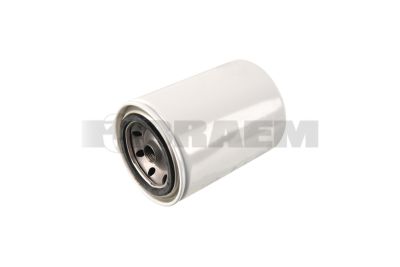 Availability: Request availabilityVBA004.1367 €28.55
Guide price excl. VAT
Equivalenten:
VOL20458769, 20458769, FEB180608, 180608, VBA004.1367, 0041367 - New Thanks to our product knowledge and built-up relationships with manufacturers worldwide, we found the most reliable alternatives. Best price-quality.
 Availability: Request availabilityVBA004.1479 €24.95
Guide price excl. VAT
Equivalenten:
VOL20458771, 20458771, FEB185171, 185171, VBA004.1479, 0041479 - New Thanks to our product knowledge and built-up relationships with manufacturers worldwide, we found the most reliable alternatives. Best price-quality.
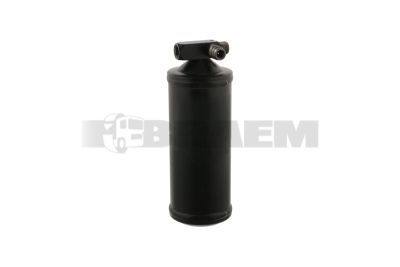 Availability: Request availabilityVBA004.1863 €46.82
Guide price excl. VAT
Equivalenten:
VOL20490945, 20490945, FEB35584, 35584, VBA004.1863, 0041863 - New Thanks to our product knowledge and built-up relationships with manufacturers worldwide, we found the most reliable alternatives. Best price-quality.
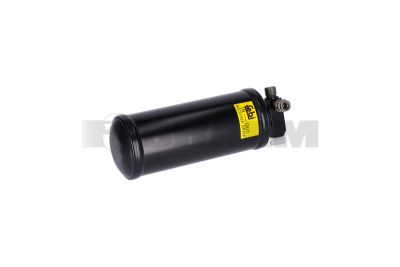 Availability: Request availabilityVBA004.2130 €69.39
Guide price excl. VAT
Equivalenten:
VOL20490947, 20490947, FEB47554, 47554, VBA004.2130, 0042130 - New Thanks to our product knowledge and built-up relationships with manufacturers worldwide, we found the most reliable alternatives. Best price-quality.
 Availability: Request availabilityVBA004.522 €51.09
Guide price excl. VAT
Equivalenten:
FEB47555, 47555, RVI50.10.141.817, 5010141817, VBA004.522, 004522 - New Thanks to our product knowledge and built-up relationships with manufacturers worldwide, we found the most reliable alternatives. Best price-quality.
 Availability: Request availability36.77972.6024€249.01
Guide price excl. VAT
Equivalenten:
36.77972.6024, 36779726024, 36.77972-6024, 36779726024, 36779726024, 81.77972.0187, 81779720187, 81.77972-0187, WEB11117544A, 11117544A, RAD580, 580, MB000.834.35.69 ... - Second-Hand Recovered from used trucks, we offer these parts. They are still in top condition and can last a long time.
- New Thanks to our product knowledge and built-up relationships with manufacturers worldwide, we found the most reliable alternatives. Best price-quality. Availability: Request availability81.61910.6039€121.42
Guide price excl. VAT
Equivalenten:
81.61910.6039, 81619106039, 81.61910-6039, 81619106039, 81619106039, RAD5008, 5008, MAHAD 224 000P, AD224000P - Second-Hand Recovered from used trucks, we offer these parts. They are still in top condition and can last a long time.
- Second-Hand Recovered from used trucks, we offer these parts. They are still in top condition and can last a long time.
- Second-Hand Recovered from used trucks, we offer these parts. They are still in top condition and can last a long time.
- New Thanks to our product knowledge and built-up relationships with manufacturers worldwide, we found the most reliable alternatives. Best price-quality. Availability: Request availabilityBOS1987.435.170
 €29.31
Guide price excl. VAT
Equivalenten:
1 987 435 170, 1987435170, BOS1987.435.170, 1987435170 - New Thanks to our product knowledge and built-up relationships with manufacturers worldwide, we found the most reliable alternatives. Best price-quality. Availability: Request availabilityFIL7010 €47.83
Guide price excl. VAT
Equivalenten:
FIL7010, 7010, NRF 33371, 33371, MAHAD 15 000S, AD15000S - New Thanks to our product knowledge and built-up relationships with manufacturers worldwide, we found the most reliable alternatives. Best price-quality. Availability: Request availabilityMAHAD 15 000S
 €64.52
Guide price excl. VAT
Equivalenten:
FIL7010, 7010, AD 15 000S, 15000S, MAHAD 15 000S, AD15000S - New Thanks to our product knowledge and built-up relationships with manufacturers worldwide, we found the most reliable alternatives. Best price-quality. Availability: Request availabilityMB000.830.00.83€476.50
Guide price excl. VAT
Equivalenten:
MB000.830.00.83, 0008300083, A0008300083 - Second-Hand Recovered from used trucks, we offer these parts. They are still in top condition and can last a long time.
- New Thanks to our product knowledge and built-up relationships with manufacturers worldwide, we found the most reliable alternatives. Best price-quality. Availability: Request availabilityMB000.830.00.83/67€476.50
Guide price excl. VAT
Equivalenten:
MB000.830.00.83/67, 0008300083/67, A0008300083/67 - Second-Hand Recovered from used trucks, we offer these parts. They are still in top condition and can last a long time.
- New Thanks to our product knowledge and built-up relationships with manufacturers worldwide, we found the most reliable alternatives. Best price-quality. Availability: Request availabilityMB000.830.12.83€226.31
Guide price excl. VAT
Equivalenten:
MB000.830.12.83, 0008301283, A0008301283 - Second-Hand Recovered from used trucks, we offer these parts. They are still in top condition and can last a long time.
- New Thanks to our product knowledge and built-up relationships with manufacturers worldwide, we found the most reliable alternatives. Best price-quality. Availability: Request availabilityMB000.830.15.83€136.99
Guide price excl. VAT
Equivalenten:
MB000.830.15.83, 0008301583, A0008301583 - Second-Hand Recovered from used trucks, we offer these parts. They are still in top condition and can last a long time.
A/C filters in the refrigerant circuit protect the A/C compressor, expansion valve and evaporator against moisture, solid contaminants and degradation products from refrigerant and compressor oil. This subcategory generally includes filter driers, also known as receiver-driers, and accumulator filters depending on the circuit configuration. They are usually located in the high-pressure section after the condenser, or in systems with an orifice tube in the low-pressure section before the compressor. A properly functioning filter drier prevents ice formation at the expansion valve, internal corrosion and premature damage to control components.
MAN and Mercedes use various A/C circuits on trucks, buses and vans. These include MAN TGL, TGM, TGA, TGS, TGX and TG3, Mercedes Atego, Axor, Actros, Arocs, Econic, Sprinter, Vito, Citaro and Tourismo, as well as MAN Lion’s City and Neoplan buses. Filter driers differ in connection size, thread, O-ring fitment, mounting position, refrigerant type, desiccant capacity and integrated pressure switches. Therefore, always identify an A/C filter using the chassis number. Visual comparison or selection based solely on the model name is never sufficient.
A receiver-drier combines three functions: buffering liquid refrigerant, filtering metal particles and dirt, and absorbing moisture through a hygroscopic desiccant, usually molecular sieve or zeolite. The filter element must withstand the operating pressures and temperature fluctuations of the A/C circuit. In heavy-duty applications with long pipework, roof-mounted evaporators or multiple cabin zones – such as city buses, coaches and trucks with sleeper cabs – the correct desiccant capacity is particularly important.
The choice depends not only on the vehicle series, but also on the version of the condenser, compressor, pipework and expansion system. Older installations may use R134a, while newer vehicles may have other refrigerants and modified service connections. Also check whether the filter drier has an integrated sight glass, pressure switch, sensor port or specific mounting bracket. An incorrect connection, insufficient O-ring compatibility or a different internal passage will cause pressure loss, leakage or insufficient cooling performance.
A saturated or internally contaminated filter drier often causes insufficient cold air, fluctuating outlet temperature, abnormally high high-side pressure readings or excessively low evaporator pressure. Moisture in the circuit can freeze at the expansion valve, causing cooling to fail temporarily and return after the vehicle has been stationary. Metal particles in the filter drier often indicate wear of the A/C compressor, compressor bearings or internal piston/scroll components. In that case, do not replace the drier alone: flush the permitted pipe sections and condenser, assess the expansion valve and check the compressor oil for contamination.
First read out fault codes from the climate control system and engine management system, and check the control of the compressor and condenser fan. Then use an A/C service station to measure the high- and low-pressure sides at stabilised engine speed, while recording the intake and outlet temperatures. Compare the measured pressure values with the ambient temperature and the manufacturer's specifications. Use a contact thermometer to measure the temperature difference before and after the filter drier; a clear local temperature drop or frost formation may indicate an internal restriction. Also check connections and weld seams using electronic leak detection or forming gas, not only for visible oil traces.
Always replace the filter drier when the A/C circuit has been open for an extended period, after compressor replacement, following a serious leak or in the event of proven moisture and dirt contamination. Only connect new components immediately before installation: the desiccant absorbs moisture from the ambient air. Fit new O-rings compatible with the refrigerant and compressor oil, use the specified lubricant and observe the correct tightening torques to prevent damage to aluminium connection blocks.
Then evacuate the closed circuit for a sufficient period to remove air and moisture, perform a vacuum hold test and charge only the specified refrigerant mass and the correct quantity of compressor oil. A correctly selected A/C filter, readily available from Braem stock, helps prevent costly compressor damage and unplanned downtime.