 English
 Nederlands
 Français
 Deutsch
 Español
 Polski
 Русский
 العربية
 Română
Call us on +32 (0) 51 57 58 58 or contact us.
Central lubrication for MAN / Mercedes trucks and buses
- New Thanks to our product knowledge and built-up relationships with manufacturers worldwide, we found the most reliable alternatives. Best price-quality.
 Availability: Request availabilityWV410 001
 €0.43
€0.43Guide price excl. VAT
Equivalenten:
WV410 001, 410001 - New Thanks to our product knowledge and built-up relationships with manufacturers worldwide, we found the most reliable alternatives. Best price-quality.
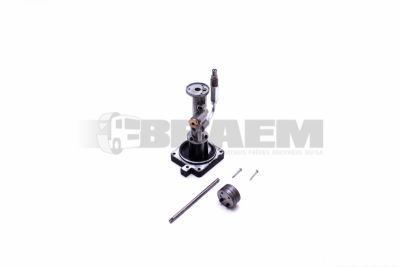 Availability: Request availabilityWV995-900-084 €408.05
Guide price excl. VAT
Equivalenten:
81.49101.6036, 81491016036, 81.49101-6036, WV2-261-14, 226114, WV995 900 084, 995900084, WV995-900-084, 995900084, WV995-900-084.OCC, 995900084OCC, MB000.571.94.01 ... - New Thanks to our product knowledge and built-up relationships with manufacturers worldwide, we found the most reliable alternatives. Best price-quality.
 Availability: Request availabilityWVKFU2.U11 €117.03
Guide price excl. VAT
Equivalenten:
10070069, 10070069, 81.49503.0009, 81495030009, 81.49503-0009, WV2-261-02, 226102, WVKFU 2.U 41, FU2U41, WVKFU 2.U1, FU2U1, WVKFU2.U11, FU2U11, WVKFU2.U41, FU2U41 ... - New Thanks to our product knowledge and built-up relationships with manufacturers worldwide, we found the most reliable alternatives. Best price-quality.
 Availability: Request availability06.38070.0102€5.71
Guide price excl. VAT
Equivalenten:
06.38070.0102, 06380700102, 06.38070-0102, 6380700102, 6380700102, BH028.039, 028039 - Second-Hand Recovered from used trucks, we offer these parts. They are still in top condition and can last a long time.
- New Thanks to our product knowledge and built-up relationships with manufacturers worldwide, we found the most reliable alternatives. Best price-quality. Availability: Request availability06.38070.0103€5.71
Guide price excl. VAT
Equivalenten:
06.38070.0103, 06380700103, 06.38070-0103, 6380700103, 6380700103, FEB1096, 1096 - Second-Hand Recovered from used trucks, we offer these parts. They are still in top condition and can last a long time.
- New Thanks to our product knowledge and built-up relationships with manufacturers worldwide, we found the most reliable alternatives. Best price-quality. Availability: Request availability06.38070.0112€13.91
Guide price excl. VAT
Equivalenten:
06.38070.0112, 06380700112, 06.38070-0112, 6380700112, 6380700112 - Second-Hand Recovered from used trucks, we offer these parts. They are still in top condition and can last a long time.
- New Thanks to our product knowledge and built-up relationships with manufacturers worldwide, we found the most reliable alternatives. Best price-quality. Availability: Request availability06.38070.0202€11.86
Guide price excl. VAT
Equivalenten:
06.38070.0202, 06380700202, 06.38070-0202, 6380700202, 6380700202 - Second-Hand Recovered from used trucks, we offer these parts. They are still in top condition and can last a long time.
- New Thanks to our product knowledge and built-up relationships with manufacturers worldwide, we found the most reliable alternatives. Best price-quality. Availability: Request availability06.38070.0203€7.12
Guide price excl. VAT
Equivalenten:
06.38070.0203, 06380700203, 06.38070-0203, 6380700203, 6380700203 - Second-Hand Recovered from used trucks, we offer these parts. They are still in top condition and can last a long time.
- New Thanks to our product knowledge and built-up relationships with manufacturers worldwide, we found the most reliable alternatives. Best price-quality. Availability: Request availability06.38070.0303€6.05
Guide price excl. VAT
Equivalenten:
06.38070.0303, 06380700303, 06.38070-0303, 6380700303, 6380700303, DIN71412CM10X1-4KT, 71412CM10X14KT - Second-Hand Recovered from used trucks, we offer these parts. They are still in top condition and can last a long time.
- Second-Hand Recovered from used trucks, we offer these parts. They are still in top condition and can last a long time.
- New Thanks to our product knowledge and built-up relationships with manufacturers worldwide, we found the most reliable alternatives. Best price-quality. Availability: Request availability06.38079.0003€9.03
Guide price excl. VAT
Equivalenten:
06.38079.0003, 06380790003, 06.38079-0003, 6380790003, 6380790003 - Second-Hand Recovered from used trucks, we offer these parts. They are still in top condition and can last a long time.
- New Thanks to our product knowledge and built-up relationships with manufacturers worldwide, we found the most reliable alternatives. Best price-quality. Availability: Request availability06.74080.0102€3.51
Guide price excl. VAT
Equivalenten:
06.74080.0102, 06740800102, 06.74080-0102, 6740800102, 6740800102 - Second-Hand Recovered from used trucks, we offer these parts. They are still in top condition and can last a long time.
- Second-Hand Recovered from used trucks, we offer these parts. They are still in top condition and can last a long time.
- New Thanks to our product knowledge and built-up relationships with manufacturers worldwide, we found the most reliable alternatives. Best price-quality. Availability: Request availability64.98131.0003€6.83
Guide price excl. VAT
Equivalenten:
64.98131.0003, 64981310003, 64.98131-0003, 64981310003, 64981310003 - Second-Hand Recovered from used trucks, we offer these parts. They are still in top condition and can last a long time.
- New Thanks to our product knowledge and built-up relationships with manufacturers worldwide, we found the most reliable alternatives. Best price-quality. Availability: Request availability81.49101.0007€51.47
Guide price excl. VAT
Equivalenten:
81.49101.0007, 81491010007, 81.49101-0007, 81491010007, 81491010007

Centralised lubrication supplies connected pivot points, bushes and plain bearings with metered quantities of grease. On MAN and Mercedes trucks, buses and vans, a correctly adjusted system reduces wear and unplanned downtime. However, a functioning lubrication pump does not guarantee that every lubrication point receives enough grease: blocked metering elements, trapped air and broken lines can cause localised dry running. Diagnosis must therefore cover the entire system, from the reservoir and pump controls to the distributors and connected lubrication points.
Centralised lubrication systems include progressive systems, single-line systems with metering injectors and dual-line systems. Progressive distributors perform successive metering strokes; a blocked outlet can stop the entire distribution cycle. In single-line systems, both pressure build-up and pressure relief are essential for the metering injectors to recharge correctly. Pumps, distributors and metering elements are therefore not necessarily interchangeable.
Always identify parts using the vehicle's chassis number. Visual comparison or selection based on the model name alone is never sufficient. For retrofitted installations, also check the system brand, identification plate and piping diagram. On MAN TGS and TGX, Mercedes Actros and Arocs, and buses such as Lion’s City or Citaro, for example, the specification varies according to the chassis configuration and bodywork. On TGE and Sprinter, centralised lubrication is generally an application-specific installation. The pump's power supply alone does not determine suitability; the controls and connected lubrication points are decisive.
Compare the nominal operating pressure, pressure relief valve opening pressure, pump flow rate, metered volume per cycle, line diameter and connection thread. Also check the supply voltage, seal material and the pressure and temperature ratings of plastic lines or steel tubing. The specified grease consistency according to NLGI (National Lubricating Grease Institute) can range from fluid grease grade 000 or 00 to grade 2. These grades are not freely interchangeable: pumpability, line length and ambient temperature must be compatible with the system.
Dry pivot points, squeaking bushes, uneven grease collars and recurring pressure alarms indicate insufficient lubrication. A reservoir that empties quickly is more likely to indicate leakage or over-lubrication. Low temperatures can increase flow resistance; dirt or incompatible grease mixtures can block metering passages.
- Check the reservoir and lubricant. Assess the fill level, contamination and trapped air. Verify the grease type, thickener and approval; topping up with the same consistency grade does not guarantee compatibility.
- Test the electrical controls. Activate a manual lubrication cycle. Use a multimeter to measure the supply voltage under load and the voltage drop across earth and power supply connections. Check fuses, timer settings and any cycle status indications.
- Measure pressure build-up and relief. Connect a suitable pressure gauge to the specified test point. Compare the peak pressure and pressure profile with the system documentation. High pressure without distributor movement indicates a possible blockage; insufficient pressure may indicate leakage or pump wear.
- Verify grease delivery. Check cycle indicators and measure the quantity delivered over a specified number of cycles using a graduated cylinder or scales. Locate deviations in each branch line according to the service procedure.
Depressurise the system before dismantling and keep connections clean and capped. If a metering element is faulty, also look for kinked lines, contamination or a blocked lubrication point. Use lines and fittings with the specified pressure rating, fit and insertion depth. Where specified, pre-fill replacement lines with the correct grease and bleed the system according to the manufacturer's procedure.
After installation, run several test cycles, check every connected lubrication point and verify pressure monitoring and leak-tightness. Adjust lubrication intervals to suit the load, operating hours and exposure to moisture. Extra grease does not compensate for worn bushes: measure the existing clearance and repair mechanical damage separately.