 English
 Nederlands
 Français
 Deutsch
 Español
 Polski
 Русский
 العربية
 Română
Call us on +32 (0) 51 57 58 58 or contact us.
Chassis for MAN / Mercedes trucks, buses and vans


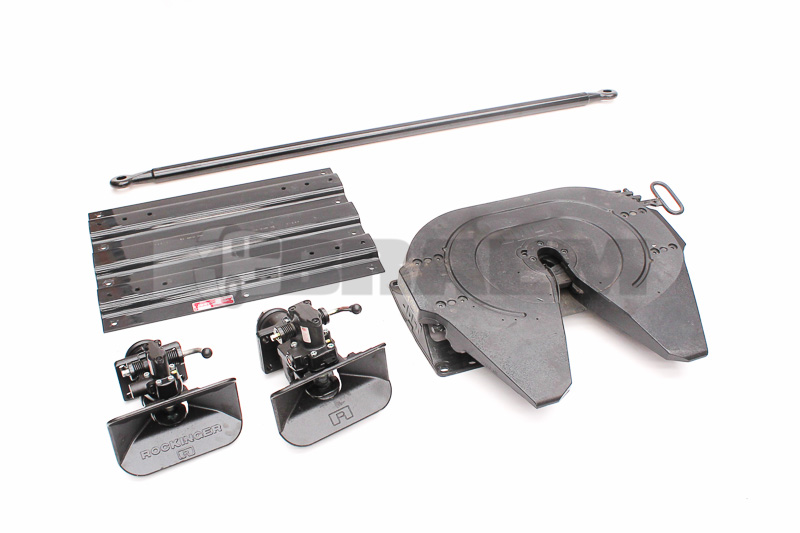

The chassis forms the skeleton of every MAN and Mercedes truck, coach and van. All other vehicle systems, from the engine and drivetrain to the cab and suspension, are mounted directly or indirectly to the chassis. The chassis is exposed daily to heavy loads, torsion, vibrations and changing road conditions. A chassis that is not in optimal condition causes problems throughout the entire vehicle. At Braem you will find a wide range of chassis parts that allow repairs to be carried out correctly from a technical standpoint, durably and safely.
The function of the chassis within the vehicle
The chassis is the load-bearing base of a vehicle. It carries the full weight of the vehicle, the installed body or the coupled trailer and the load. The chassis provides strength and stability. It ensures that the truck remains rigid under heavy loads, when cornering, braking or accelerating, and when driving on uneven roads. The chassis absorbs forces generated by impacts. It distributes the load evenly over the full length of the chassis, across multiple axles and wheel points and across the suspension. The chassis is equipped with mounting points that allow the axles and suspension, the engine and the gearbox, the fuel tanks and the cab to be attached to the chassis.
Interaction with other vehicle systems
The engine and the gearbox are suspended in the chassis. The engine delivers torque to the gearbox and the drivetrain. According to the principle that every action has an equal and opposite reaction, the engine wants to rotate the other way. This counter-rotating force, also called reaction torque, is transmitted to the chassis via the engine mounts and the associated rubber mounts. The chassis absorbs the reaction torque, preventing the engine and gearbox from rotating along with it. It keeps the drivetrain in place and aligned. The front axle is attached to the chassis via the suspension. Steering forces are therefore transmitted via the front axle to the chassis, causing the entire vehicle to follow the steered direction. A rigid chassis ensures good steering precision and straight-line stability. The chassis absorbs the reaction forces that arise from the lateral forces of the tires when cornering. On driven rear axles, the reaction force due to differential action is absorbed by the chassis. That is why the rear axles are not rigidly fixed but connected to the chassis via the suspension system. The cab rests on the chassis, which supports it, provides stability, damps vibrations and absorbs forces for safety and comfort. When a truck brakes, the wheels try to keep rolling due to their kinetic energy: an object in motion tends to stay in motion. The brakes bring the rotating wheels to a stop, creating braking force on the tires. This creates an opposing force (reaction force) that is transferred via the axles to the chassis. The chassis absorbs these reaction forces and distributes them within its structure, so the truck comes to a stable and safe stop.
Main chassis components and their role
A chassis consists of several key components that together provide load capacity, stability and the connection of all systems. Below is an overview with their function:
The main rails are beams that run along the length of the vehicle. They carry the weight and distribute all forces evenly. They form the base to which all other components are mounted. The crossmembers, also called transverse members, are mounted horizontally between the main rails, connecting the main rails to each other. These crossmembers increase torsional stiffness and prevent the chassis from twisting. Engine and gearbox mounts are installed in the chassis main rails and connect the engine and gearbox to the chassis via rubber mounts. These mounts carry the weight of the engine and gearbox and keep them in place. The engine mounts absorb the reaction forces of engine torque. The gearbox mounts absorb the forces of drivetrain torque. Suspension mounting points are attachment points for coil springs, leaf springs, air suspension, shock absorbers and tie rods of the front and rear axle(s). They connect the axles to the chassis, absorbing shocks and vibrations. They provide stability and grip.
Chassis load points and structural material fatigue
Load points are locations where the chassis must absorb additional forces or where the load is concentrated. These points are located at the engine, gearbox, cab, and front and rear axle mounts. In these areas the chassis is fitted with reinforcements or special provisions so forces can be absorbed safely and structural material fatigue is limited. Structural fatigue occurs when a material is repeatedly loaded, even if the forces are below the material’s maximum strength. Due to repeated bending, torsion, force concentration and exposure to vibrations, the material loses strength. This leads to small cracks and deformations at these load points, which can ultimately cause the chassis to break. This can be prevented by installing crossmembers in these areas and providing the chassis with rounded corners.
Common wear and symptoms indicating chassis problems
A poorly functioning or weakened chassis has major consequences because the chassis is the truck’s basic structure. Cracks in or weakening of main rails and crossmembers causes the chassis to sag or twist, which can lead to breakage. The vehicle steers less tightly and less precisely. As a result, the vehicle feels unstable when cornering. It becomes harder to keep the vehicle under control, and the driver has to constantly correct. A deformed chassis causes poor axle alignment. This results in uneven tire wear and higher fuel consumption. Poor alignment of the axles causes the brakes to no longer work evenly. This increases braking distance and compromises safety. In extreme cases, the chassis breaks, making the vehicle unusable.
The importance of timely and preventive repair
Chassis problems worsen quickly if they are not addressed in time. Minor deviations lead to structural damage over time. Timely and preventive repairs prevent damage to adjacent systems such as the axles and the suspension.
Repairing or replacing chassis parts by welding
Welding on a chassis is permitted, but only under strict conditions. Because the chassis is a load-bearing safety component, there are clear technical and legal rules. Welding is allowed for small cracks. Welding is allowed on crossmembers and on mounting points. This repair must be carried out by a qualified welder who follows the correct welding procedure. The welds must be made stress-free. Manufacturers allow welding provided the correct welding method is used, the right materials are used, and only in specified locations.
When replacement is necessary
In the case of structural cracks, severe corrosion or deformation of main rails, replacement is the only safe solution. A bent or twisted chassis must not be welded. A welded chassis must be at least as strong as the original. Continuing to drive with a damaged chassis endangers not only the vehicle but also other road users.
Chassis tailored to professional use
MAN and Mercedes vehicles are used in a wide range of sectors. During configuration, the chassis is deliberately selected based on the vehicle and the application. This is even crucial for safety, service life and legal compliance. The chassis is therefore not a standard part, but is tailored to what the truck needs to do.
Practical advice and step-by-step plan based on experience in chassis maintenance
- Park the vehicle on a level surface and chock the wheels.
- Relieve the chassis (e.g. lower the air suspension). This ensures that stresses in the chassis disappear, allowing the inspection to be carried out safely.
- Clean the chassis thoroughly so any cracks and rust are visible.
- Inspect the chassis parts for cracks, deformation, sagging or damaged coating. Focus on the bends in the chassis, on stress concentration zones and on the areas around the engine and cab mounting points.
- Check the crossmembers for cracks at weld seams. Check for bending. Check for loose or missing connections. Focus on crossmembers near the truck-mounted crane, the tipper or the fifth-wheel coupling.
- Inspect parts for corrosion and rust.
- Check the vehicle alignment.
- Document the diagnosis and determine the correct maintenance approach through repair or replacement of chassis parts.
The added value of Braem for chassis parts
Braem has an extensive stock of chassis parts for MAN and Mercedes trucks, buses and vans. Thanks to fast delivery and technical expertise, repairs can be carried out efficiently.
Customers trust Braem because of:
- Parts with structural reliability
- Fast availability
- Technical support for diagnosis and installation
- Transparent warranty and return conditions
- Good quality through strong quality control
A chassis in good condition is the foundation for safety, durability and trouble-free vehicle operation.