 English
 Nederlands
 Français
 Deutsch
 Español
 Polski
 Русский
 العربية
 Română
Call us on +32 (0) 51 57 58 58 or contact us.
Engine housing


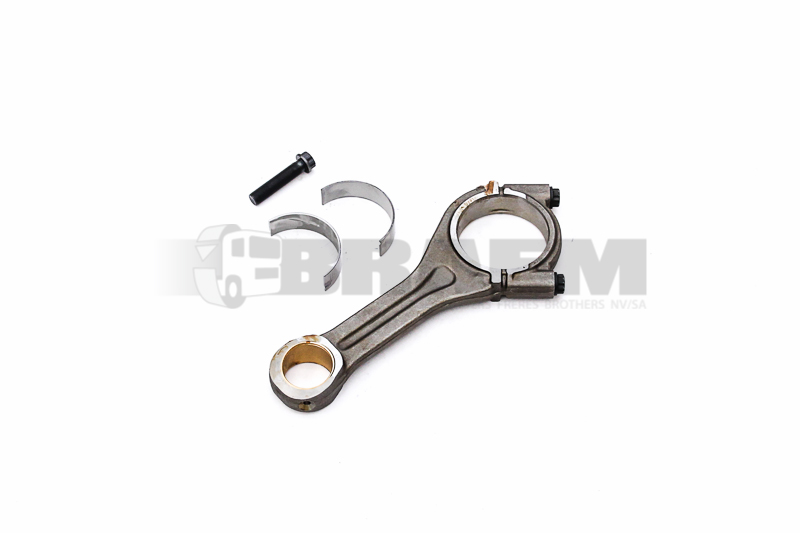
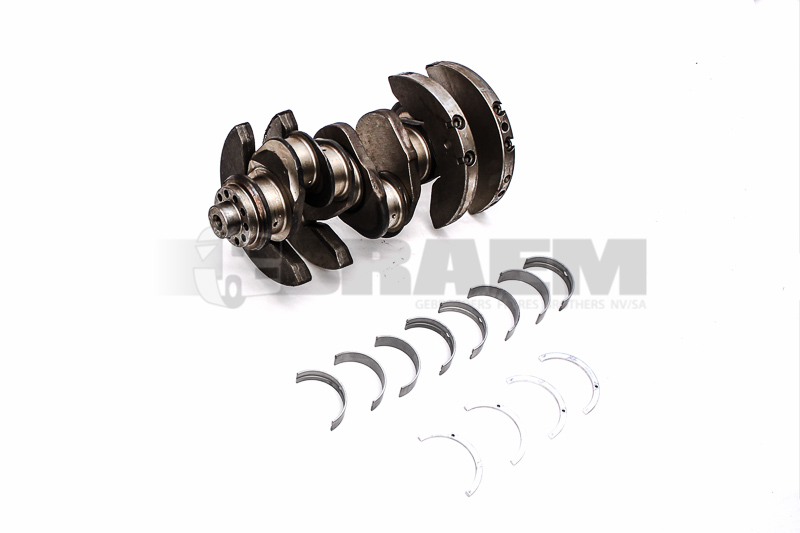

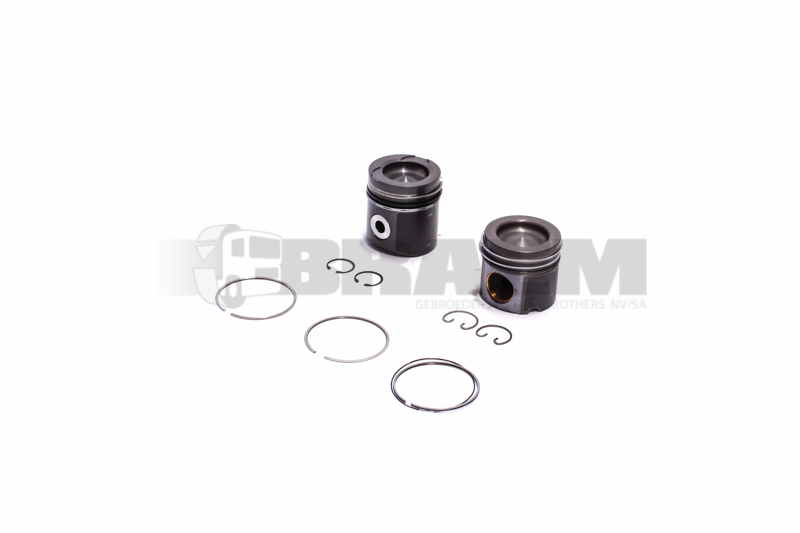

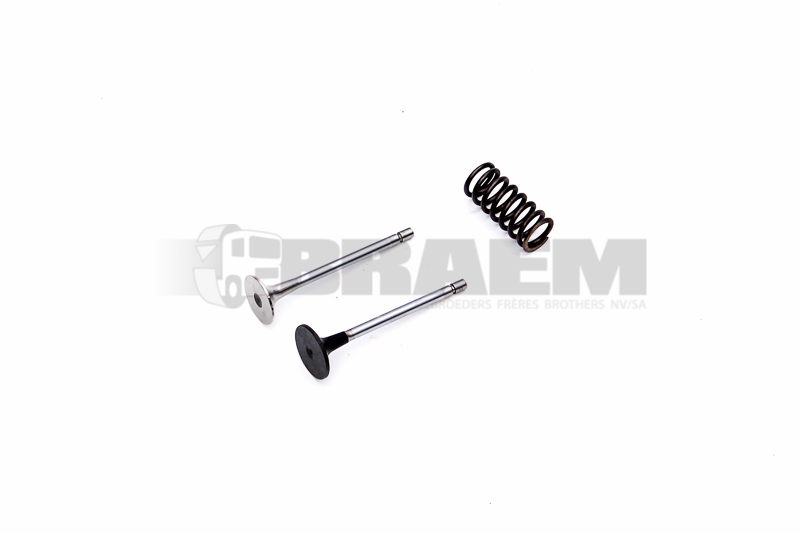


The rotating section of the engine, also known as the short block, forms the load-bearing and rotating base assembly of a diesel engine. This assembly is relevant for overhauls where the cylinder head, fuel injection system, timing drive and ancillary components can be reused separately. For MAN D08, D20, D26 and D38 engines and Mercedes OM 904, OM 906, OM 926, OM 936, OM 457, OM 470, OM 471 and OM 473 engines, bore, stroke, cylinder liner design, crankshaft journals, bearing size classes and sealing surfaces differ depending on the engine generation.
Depending on the engine design, a short block consists of:
- the engine block with cylinder bores or bores for wet cylinder liners;
- cylinder liners, including sealing rings and, where applicable, shim rings;
- pistons with piston rings, gudgeon pins and retaining rings;
- connecting rods with connecting rod bearing shells and connecting rod bolts;
- the crankshaft with main bearing shells, thrust bearings and main bearing bolts;
- bearing caps and, where fitted, a bearing bridge or lower crankcase construction;
- internal oil passages, oil gallery plugs and piston cooling jets;
- the oil sump or lower section, if included in the supplied short block configuration.
Always check the exact scope of supply: a short block is not a complete engine and is generally supplied without cylinder head, injectors, turbocharger, oil pump, water pump, flywheel and external engine accessories. Engine components required to build up a short block must always be identified using the chassis number and engine number. Visual comparison or selection based solely on the model name is never sufficient.
A defective engine block is often preceded by low engine oil pressure, metal particles in the drained engine oil, knocking noises under load, increased crankcase blow-by, coolant consumption or insufficient compression. In engines with wet cylinder liners, cavitation, corrosion around the liner seats or leaking liner seals can cause coolant to enter the oil sump. Cracks between cylinder bores, around main bearing tunnels or in coolant passages are critical damage patterns that generally rule out local repair.
After complete disassembly, first measure the cylinder liner using an internal bore gauge or cylinder bore gauge at several heights and in two directions. This allows you to assess taper, ovality and wear against the engine specifications. Check the cylinder edge for wear ridges and, on wet liners, measure liner protrusion using a measuring bridge and dial gauge; incorrect protrusion prevents reliable sealing of the cylinder head gasket.
Next, measure the crankshaft journals with a micrometer for roundness, taper and standard or undersize dimensions. Check bearing oil clearance using a calibrated measuring method, for example Plastigage as an additional check, and measure crankshaft end float with a dial gauge. Inspect connecting rods for twist and bending; incorrect centre distance or axis alignment causes premature wear of pistons, gudgeon pins and cylinder liners.
Replace a short block when the engine block no longer falls within the permitted machining tolerances, the main bearing tunnels are distorted, or cracks and cavitation compromise structural reliability. Do not reuse a crankshaft or connecting rods without dimensional inspection, even if no damage is visually visible. Fit new main bearing shells, connecting rod bearing shells, thrust bearings, piston rings or complete pistons, seals and specified stretch bolts according to the correct tightening torques and angle tightening procedure.
During installation, clean all oil passages, replace the engine oil filter and flush the lubrication circuit if bearing damage has been identified. Also inspect the oil pump, oil cooler and oil jets: remaining metal particles can immediately damage a reconditioned short block. A technically inspected short block assembly reduces downtime and provides a reliable basis for further engine overhaul.