 English
 Nederlands
 Français
 Deutsch
 Español
 Polski
 Русский
 العربية
 Română
Call us on +32 (0) 51 57 58 58 or contact us.
Fuel system for MAN / Mercedes trucks, buses and vans

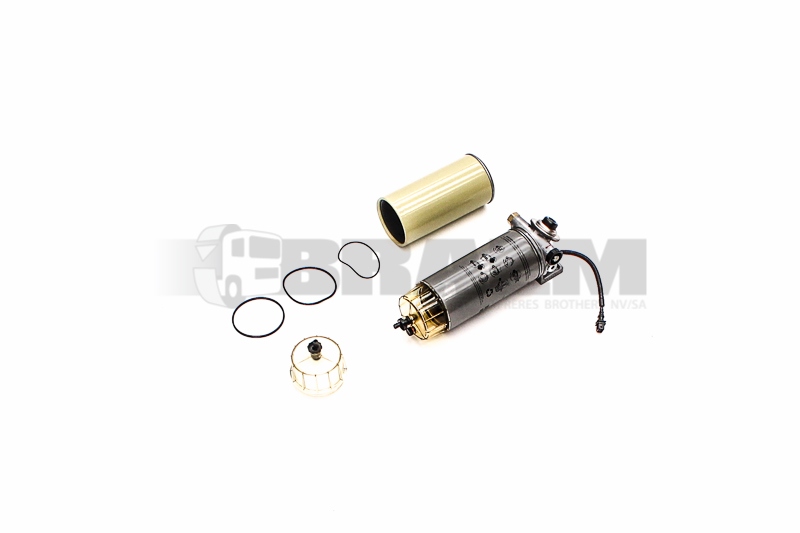
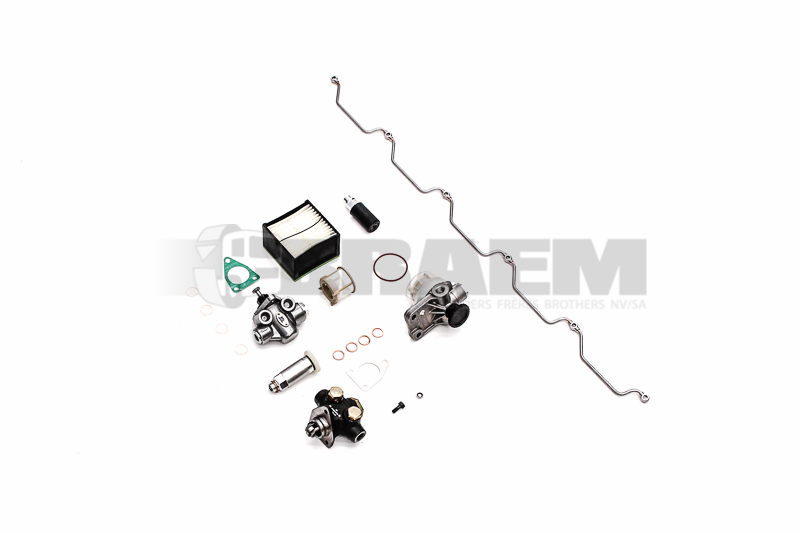
The fuel system is crucial for supplying the internal combustion engine with fuel in MAN and Mercedes trucks, coaches and vans. The system ensures that fuel is transported to the engine at the correct pressure, in the correct quantity, and at the correct moment. In modern vehicles, this process is extremely precisely calibrated and highly dependent on properly functioning components. Due to intensive use, varying fuel quality and changing weather conditions, wear on the fuel system is inevitable. At Braem you will find an extensive range of fuel parts that enable repairs to be carried out correctly, durably and professionally.
Main components, role and operation of the fuel system within the vehicle and its interaction with the engine
The fuel tank, mounted to the chassis via brackets and straps, ensures safe fuel storage on the vehicle. This diesel tank is opened for refuelling and closed using a fuel tank cap. The fuel lift pump on many MAN and Mercedes vehicles is mounted directly on the engine and is also driven by it. This fuel pump delivers fuel at low pressure to the engine via fuel lines. Before the fuel is pumped into the injection system, it passes through the fuel filters. First, it is cleaned of large particles such as rust, sand and dirt via the fuel pre-filter, and then it is cleaned of microscopic contamination via the fuel fine filter. It then enters the engine’s injection system either via the injection pump (on older vehicles) or via the high-pressure pump of the common-rail system (on newer vehicles). Not all fuel supplied to the engine is actually atomized and burned. The fuel lift pump and the common-rail system deliver more fuel than the engine needs at that moment. This is necessary on the one hand to ensure cooling of the high-pressure pump and the injectors, and on the other hand it provides constant and stable pressure in the system. The unused fuel is returned to the diesel tank via a return line.
Common wear and recognizable issues due to water in the fuel
Besides combustion, fuel in the fuel system primarily serves for cooling, lubrication and pressure stabilization of the pump and injectors. Water enters the fuel system through condensation, contaminated fuel, rain, bacterial growth and maintenance errors, especially with half-full tanks and large temperature fluctuations. Water is heavier than fuel, so it sinks to the bottom of the fuel tank. When the vehicle is moving, a temporary emulsion of water and fuel is created. Water changes fuel from a lubricating, homogeneous, easily atomized medium into an irregular, corrosive and harmful medium for the fuel system. To remove water from the fuel, a water separator is fitted.
Typical warning signs related to fuel supply
A float in a fuel tank measures how much fuel is in the fuel tank and passes this on to the fuel level gauge on the instrument panel.
The importance of timely and preventive maintenance of the fuel system to prevent engine damage
Filter performance decreases over time. Therefore, timely and preventive replacement of water separators, pre-filters or fine filters is very important. This safeguards fuel quality and therefore protects fuel pumps and injectors. Avoiding air ingress—due to leaks in fuel hoses, a poorly sealing tank cap, or air in filters during replacement—ensures a reliable fuel supply at constant pressure. In the past, air ingress was removed from the fuel circuit using a hand pump. Only good-quality fuel guarantees optimal combustion, delivers consistent engine performance and ensures low fuel consumption.
Repairing or replacing fuel components
The fuel tank can be repaired in case of minor rust spots and small leaks in the weld seams. In the event of large cracks or structural damage, it must be replaced. A fuel tank affected by rust or corrosion contaminates the fuel and must be replaced. Suction and supply lines that are subject to cracking must be replaced. Couplings can be made airtight again by replacing the O-rings. Water separator filters, pre-filters and fine filters cannot be cleaned and must always be replaced.
Fuel systems tailored to professional use
MAN and Mercedes vehicles are used in a wide range of conditions, from long-distance transport to construction and civil engineering transport. In long-distance transport, larger and multiple tanks are fitted to increase tank capacity. This reduces refuelling stops. The fuel tanks are long and narrow and are mounted on the side of the chassis. They are connected to each other, so they work as communicating vessels, making the fuel level in each tank equal. In other cases, the vehicle is equipped with an integrated fuel system. This ensures that the fuel level of all different tanks is measured simultaneously via tank floats and level sensors, and that the measured information is brought together on one display. Pumps and valves determine from which tank fuel is pumped to the engine. For construction and civil engineering transport, smaller and more robust tanks are chosen that can better withstand impacts and vibrations. They are sometimes mounted in a special frame. Fuel tanks for vehicles transporting dangerous goods must meet higher requirements. These tanks must be ADR-certified.
Practical advice from experience when maintaining the fuel system
- Check fuel tanks for rust, dents and leaks.
- Check fuel lines and couplings for cracks or loose connections.
- Check that the tank cap seals properly.
- Check the brackets and straps used to mount the fuel tank.
- Check whether tank floats can move freely and verify that they transmit the correct fuel levels to the dashboard.
- Install new fuel pre-filters and fuel fine filters.
- Drain water from the water separator using the drain tap.
- Replace the filter element of the water separator.
- Bleed the fuel circuit manually using the hand pump. Modern vehicles are equipped with a bleeding program, enabling bleeding to be performed electrically and automatically.
- Start the engine and check that it idles smoothly.
- Check the fuel supply during acceleration.
- Check that the fuel level gauges in the dashboard respond correctly during consumption.
The added value of Braem for fuel system parts
Braem has an extensive stock of fuel system parts for MAN and Mercedes trucks, buses and vans. Thanks to fast delivery and technical expertise, repairs can be carried out efficiently.
Customers trust Braem because of:
- Good quality through thorough quality control
- Technical support for disassembly and installation
- Fast delivery within Europe and beyond
- Transparent warranty and return conditions
A properly functioning fuel system is essential for performance, reliability and low operating costs. With the right parts and expertise, the vehicle remains optimally deployable.